Article ·
Copper cable theft in South Africa: what the SAHRC said
On 21 September 2026 the South African Human Rights Commission launched a policy brief arguing that copper cable theft and scrap-metal trafficking should be treated as a human rights crisis, not only a crime or an economic loss. Here is what it said, the figures behind it, and what it means for anyone protecting equipment in the field.
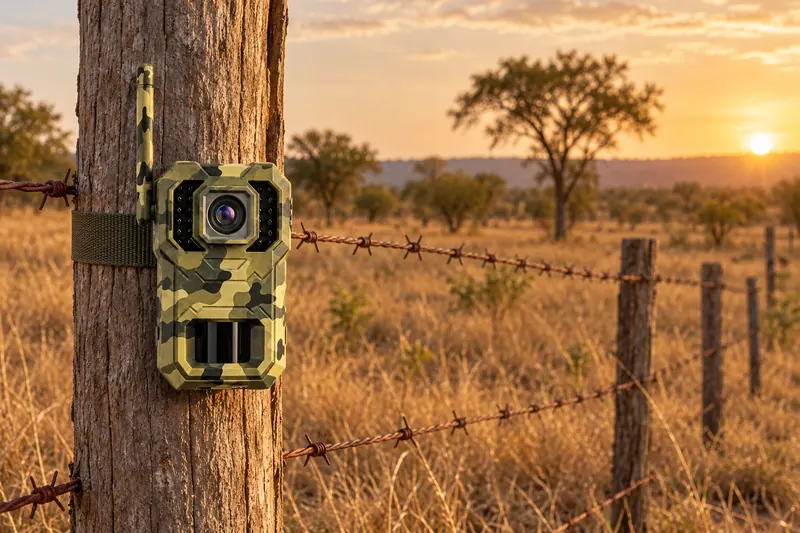
What the SAHRC said
The brief is titled Infrastructure Vandalism as a Human Rights Crisis: Copper Cable and Scrap Metal Theft, Regulatory and Enforcement Gaps, and the Erosion of Socio-Economic Rights.[1] Its argument is that stolen cable is not just property crime: when water pumps, power lines, schools and clinics lose their wiring, people lose water, electricity, healthcare and education.[2]
The Commission says the harm falls hardest on poor, rural and informal-settlement communities, because wealthier households can fall back on generators, boreholes and private security.[2]
The figures in the brief
| Measure | Figure |
|---|---|
| Economic damage from copper theft | More than R45 billion a year, from research commissioned by the Department of Trade, Industry and Competition |
| Eskom theft and vandalism losses | R221 million year-to-date by mid-2025, down from R271 million the year before |
| Transnet Freight Rail | 4,633 km of copper cable lost between 2020 and October 2023 |
As reported by Sowetan on 22 September 2026.[2] The Commission also said that in June 2026 the OR Tambo District Municipality told it vandalism and copper theft were major contributors to failing water infrastructure.
What it recommends
The Commission says South Africa already has a substantial legal framework, and that the main gap is how well it is implemented and enforced.[2] Its recommendations include:
- Parliament and its portfolio committees formally recognising infrastructure vandalism as a human rights crisis.
- Finishing outstanding reforms, with stronger traceability of transactions and verification of sellers.
- Enforcement aimed at the whole illicit value chain: organised networks, receiving dealers, facilitators and illicit money flows, not only the people caught with cable.
- Scrap-metal businesses checking that the metal they buy was obtained lawfully.
The Commission said it would take these up with Parliament, government departments, police, regulators, municipalities, state-owned companies and industry.[2]
What it means for sites off the grid
The brief is about public infrastructure, and the fix it calls for is enforcement against buyers and syndicates. A camera on a farm does not change that. But the same thieves strip cable and equipment from farms, boreholes and pump houses, and two lessons carry over.
- Do not let the camera depend on the thing being stolen. A CCTV system fed by a long mains cable goes blind when the cable is cut. A solar 4G camera has its own panel, battery and SIM, so cutting the power at the site does not stop it recording or sending alerts.
- Watch the approach, not only the equipment. Evidence that helps police is a vehicle, a number plate or a face, so point a camera at the track or gate thieves must use.
Our guide to protecting a borehole, pump and solar panels covers camera placement in detail, and the farm security page shows a full site plan.
Sources
- Media Statement: SAHRC Calls for Infrastructure Vandalism to be treated as a Human Rights Crisis. South African Human Rights Commission, 21 Sept 2026. Read 27 Oct 2026.
- It’s a human rights crisis, SAHRC says of copper cable theft. Sowetan, 22 Sept 2026. Read 27 Oct 2026.
More articles
CCTV camera with solar panel: keeping watch through Nigeria’s power outages
Lagos lost power on 19 October and Enugu faces a six-day outage. Why wired CCTV goes dark in a blackout, and how a CCTV camera with a solar panel keeps recording.
Best CCTV camera for a shop in Nigeria when the power keeps going off
Choosing the best CCTV camera for a shop in Nigeria: what to cover, which cameras keep working when the power goes, wired versus wireless, and how to compare prices.
Does a CCTV camera work without electricity?
Does a CCTV camera work without electricity? A wired one stops without backup power; a solar 4G camera keeps recording. How long each lasts, with worked numbers.