Article ·
Livestock theft in Kenya: what the 2025 figures show, and where a camera helps
Livestock theft in Kenya fell in the first quarter of 2025, according to the Interior Ministry, but the same report counted 4,935 animals stolen in three months. Here is what the figures say, what they leave out, and which part of the problem a farm camera can actually help with.
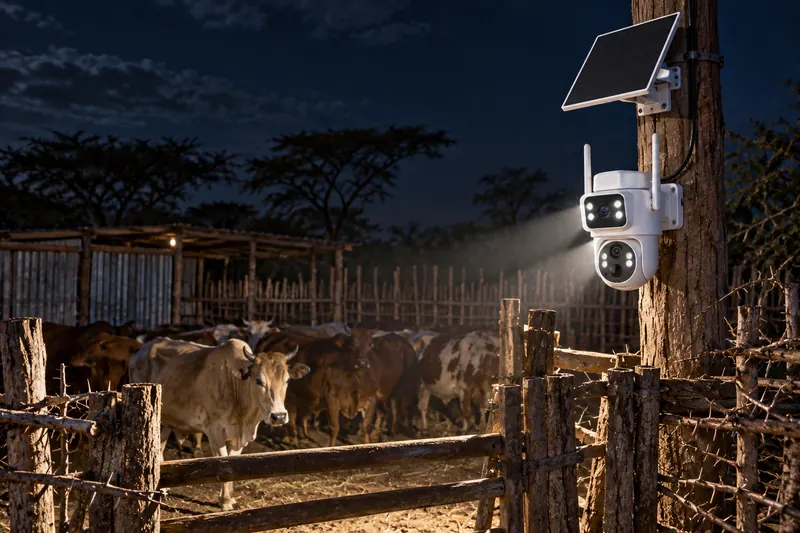
The livestock theft figures for Kenya
In May 2025 Interior Cabinet Secretary Kipchumba Murkomen released a security report covering January to March 2025. It counted 167 cases of stock theft in that quarter, down from 263 in the same quarter of 2024.[1] The number of animals stolen fell from 8,557 to 4,935 over the same comparison.[1]
| Quarter | Stock theft cases | Livestock stolen | Animals per case |
|---|---|---|---|
| Jan–Mar 2024 | 263 | 8,557 | ≈ 33 |
| Jan–Mar 2025 | 167 | 4,935 | ≈ 30 |
Cases and animals as reported from the Interior Ministry’s security report; animals per case is our own division of the two figures.
Two things stand out. First, the drop is real but the base is still large: almost 5,000 animals in a single quarter. Second, the average case involves around 30 animals, which describes organised raids rather than a goat lifted from a compound. The ministry itself named illegal small arms, the commercial side of the trade and political interference as continuing problems.[2] In July 2025 the government said it would also go after the buyers and livestock markets that move stolen animals.[1]
What the figures do not tell you
These are reported cases. Small thefts that never reach a police station are not in them, and we did not find a full-year 2025 figure from the ministry or from the Kenya National Bureau of Statistics when we checked on 27 October 2026. A single quarter is also too short to call a trend. If you sell cameras to farms, quote the numbers with their dates and avoid claiming more than they show.
Where a camera helps with livestock theft in Kenya
Be honest with buyers: a camera does not stop an armed raid by dozens of people. What it does well is the everyday end of the problem, which is where most smallholders and ranch managers lose animals and money.
- The boma or kraal gate at night. Most animals leave through a gate. A camera that keeps the gate in frame all night, with white light that switches on when a person is detected, both records and deters. That is the job of a dual-lens camera: one lens never leaves the gate while the other follows the person.
- A warning on the phone while it is happening. A SIM camera sends a human-detection alert over 4G, so the herder or owner can call for help minutes after a gate opens, not the next morning.
- Evidence for the police and for buyers. Clips with a date and time, saved to the microSD card, help identify animals and people. That matters more now that the government is targeting markets and buyers.
- Grazing land far from the house. Where there is no pole and no power, a strap-mounted 4G trail camera on a tree at a water point sends photos when its motion sensor fires.
A simple plan for one homestead
- Start with the gate.One camera on a pole 3 to 4 m up, about 6 to 10 m from the gate, so a face is readable at night.
- Check the signal on the spot.Put the SIM in a phone and stand where the camera will go. No 4G there means no alerts; move the pole or choose a network that reaches.
- Put the panel in full sun.On its own bracket above the camera, facing the sky, with the cable along the pole.
- Add the water point or grazing edge later.A trail camera on a tree covers the place animals gather away from the house.
Our livestock theft guide goes through kraal, boma and grazing layouts in more detail, and the installation guide covers mounting and anti-theft fixing for the camera itself.
For resellers and installers in Kenya
Farmers ask two questions first: will it work at night, and will it work without power and Wi-Fi. Answer both on the spot with a demonstration on your own phone, then talk about price. The solar camera price guide for Kenya shows what buyers see in shops and online, and the Kenya page lists the networks, bands and the rules for selling SIM devices.
Sources
- Government targets buyers in intensified crackdown on cattle rustling. The Star (Kenya), 19 Jul 2025. Read 27 Oct 2026.
- Kenya reports sharp decline in banditry and livestock theft in 2025. Business Today (Kenya). Read 27 Oct 2026.
More articles
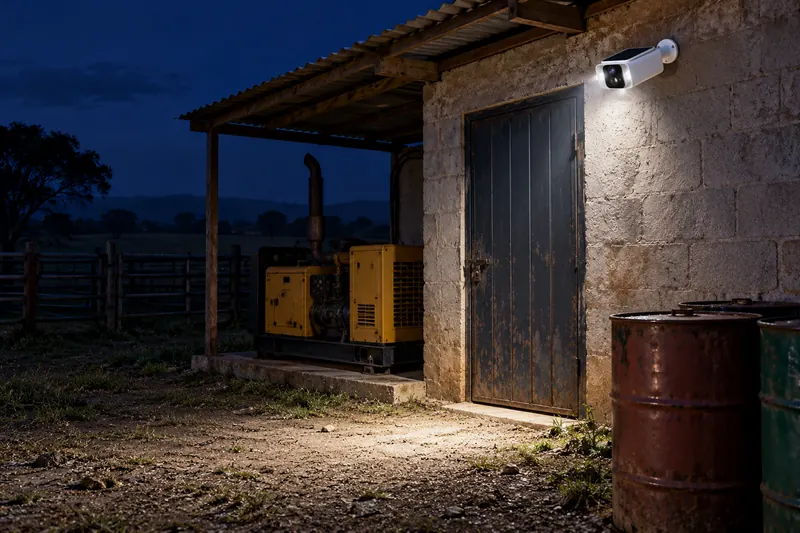
CCTV camera with solar panel: keeping watch through Nigeria’s power outages
Lagos lost power on 19 October and Enugu faces a six-day outage. Why wired CCTV goes dark in a blackout, and how a CCTV camera with a solar panel keeps recording.
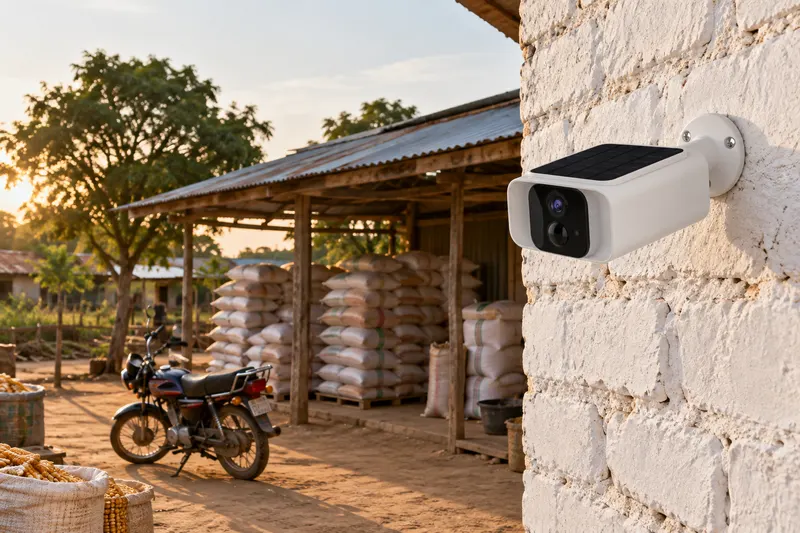
Best CCTV camera for a shop in Nigeria when the power keeps going off
Choosing the best CCTV camera for a shop in Nigeria: what to cover, which cameras keep working when the power goes, wired versus wireless, and how to compare prices.
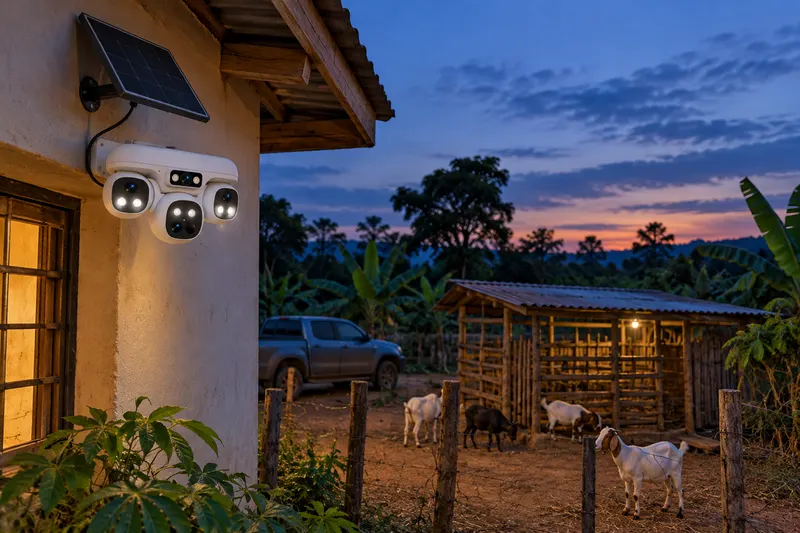
Does a CCTV camera work without electricity?
Does a CCTV camera work without electricity? A wired one stops without backup power; a solar 4G camera keeps recording. How long each lasts, with worked numbers.