Article ·
Load reduction in KZN: a CCTV camera that keeps recording
Load reduction in KZN has not ended with load shedding. South Africa has gone more than 500 days without load shedding, but Eskom still switches off power to selected areas of KwaZulu-Natal and Gauteng to protect overloaded transformers, and it aims to end load reduction only by March 2027. For a shop, a school or a home with CCTV, those hours without power are when cameras go dark. This article explains what load reduction is, where it still happens, and how a solar 4G camera keeps recording.
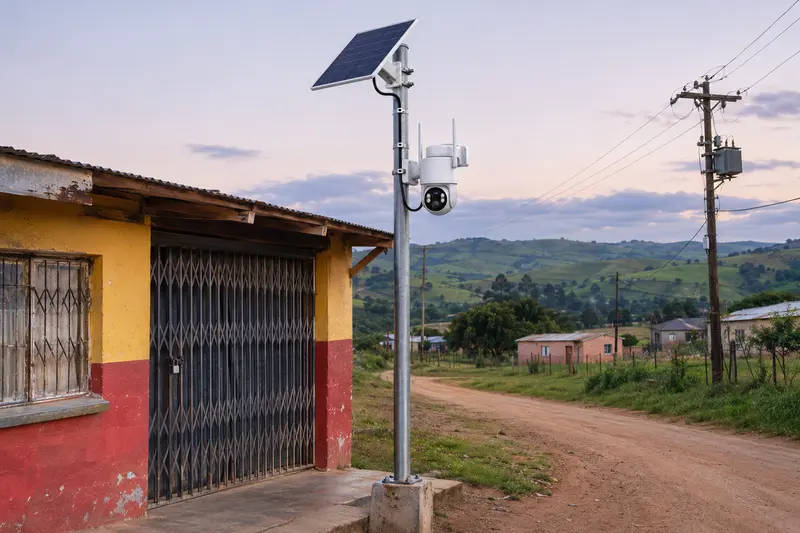
Load reduction is not load shedding
Load shedding cuts power across the country when there is not enough generation. Load reduction is local: Eskom switches off a feeder or transformer area to protect it from overloading and destruction where there are illegal connections.[1] In a 2025 briefing to Parliament, Eskom said it recorded 771 transformer failures over a year and applied load reduction on 971 feeders, affecting 1.6 million customers.[3]
Where it still happens
| Measure | Figure |
|---|---|
| Days without load shedding | 520 (SAnews, 19 October 2026)[1] |
| Customers affected by load reduction | 193,556, down from about 1.69 million; 2.7% of Eskom’s customers[1] |
| Provinces still affected | Selected areas of Gauteng and KwaZulu-Natal; seven provinces are clear[1] |
| Target to end it | March 2027, through the Load Reduction Eradication Programme[2] |
Smart meters are Eskom’s main tool: 521,453 have been installed on load reduction feeders, but more than 122,000 planned installations have been held up by safety incidents, intimidation and work stoppages.[1] So for some KZN communities the cuts may continue for months.
Why CCTV goes blind during load reduction
Most home and shop CCTV runs from the mains: the cameras, the recorder and the WiFi router. When the feeder is switched off, all three stop unless there is a backup battery or an inverter, and small UPS units often last less than the cut. That leaves the dark hours, when a street has no lights either, without any recording.
A solar 4G camera keeps recording
- Own power: a solar panel charges the camera’s battery every day, so a cut on the feeder does not touch it.
- Own connection: it sends alerts and live video over a 4G data SIM, so it does not need the router that went off with the power.
- Own recording: it records to a microSD card in the camera (up to 128 GB).
For a spaza shop, a church or a school gate, the solar 4G PTZ camera (S49) has a separate 5 W panel that can sit in the sun at the top of the pole while the camera faces the door, a 7,800 mAh battery and a built-in siren. For a yard with two gates, the dual-lens solar 4G camera (SQ62) watches one fixed view and follows movement with the other.
Set-up tips
- Check the signal.Use a phone on the same network (Vodacom, MTN, Cell C or Telkom) where the camera will go. Cell towers can also lose power during cuts, so pick the strongest network in your area.
- Mount it out of reach.About 4 metres up on its own pole or a wall bracket, with the panel facing north and clear of shade.
- Set alerts for the cut hours.Use person detection, not all motion, so alerts at night are real.
Theft and vandalism are a cause of the network damage behind many cuts; see can CCTV stop cable theft and what the SAHRC said about copper cable theft.
For installers and resellers in KZN
We are the factory and sell from 100 units, mixed models allowed, in US dollars FOB China. Our models do not hold ICASA type approval yet; the importer applies and we supply the test reports. See local prices on the 4G solar camera with SIM card price in South Africa page.
Questions
What is load reduction in KZN?
A local power cut that Eskom applies to an area where transformers are overloaded, often by illegal connections, to protect the equipment. It is separate from national load shedding.[1]
When will load reduction end?
Eskom’s target is March 2027.[2]
Does a solar camera work without WiFi?
Yes. It uses a 4G data SIM for alerts and live video and records to its own memory card.
Sources
- Eskom continues to make progress under generation plan. SAnews, 19 Oct 2026. Read 5 Nov 2026.
- Over 200k Eskom customers in Gauteng, KZN remain affected by load reduction. EWN, 4 Oct 2026. Read 5 Nov 2026.
- Here’s which province has the most load reduction. The Citizen, 4 Nov 2025. Read 5 Nov 2026.
More articles
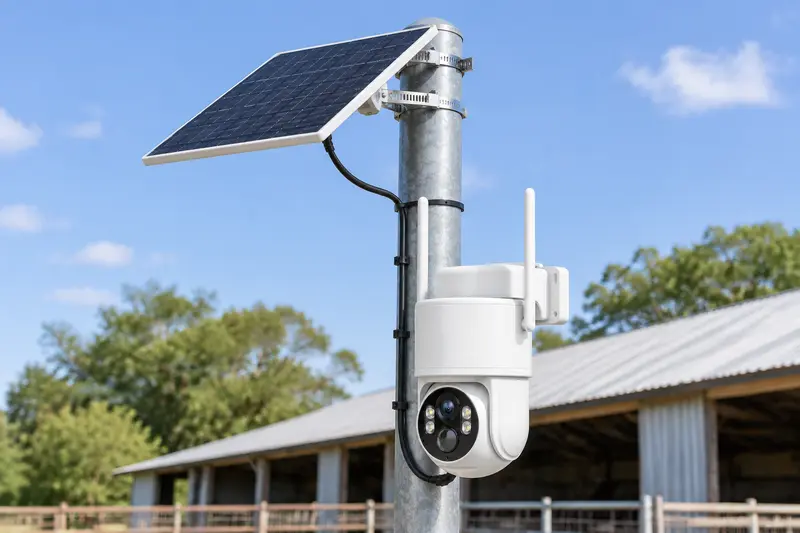
How to mount a separate solar panel for a CCTV camera
How to mount a solar panel for a CCTV camera: where it goes on the pole, which way it faces, the tilt, clamping, cable routing, drip loop and panel sizes per model.
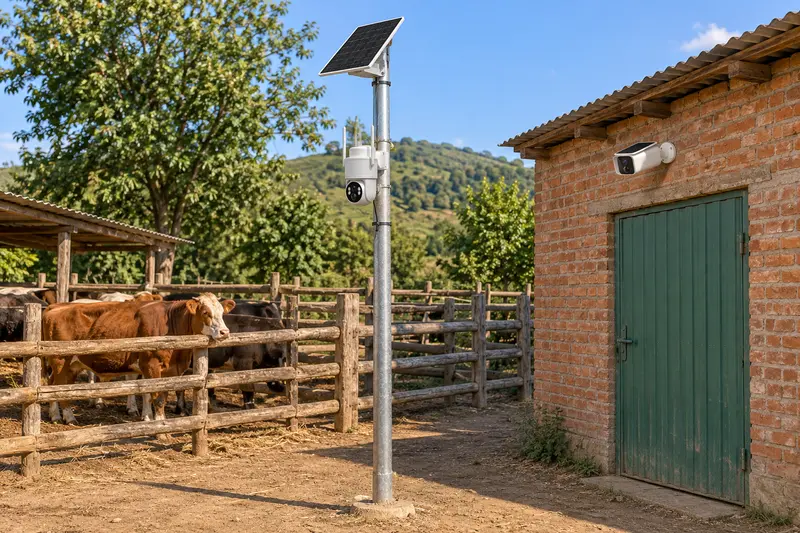
PTZ vs bullet camera on a farm: which solar 4G camera goes where
PTZ vs bullet camera on a farm: how a pan-tilt S49 and a fixed S26 bullet differ in view, night range, solar panel and price, and which suits a gate, a pen or a store.
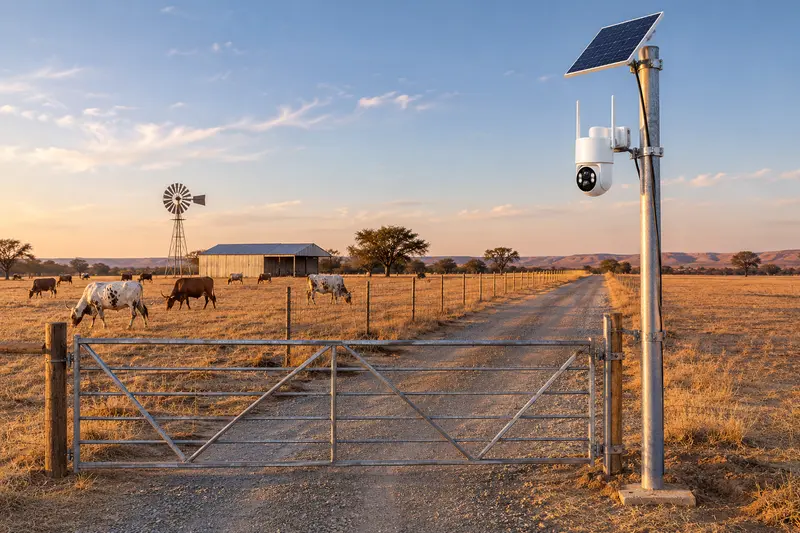
Farm security systems in South Africa: solar 4G PTZ cameras without Wi-Fi
Farm security systems in South Africa: why livestock theft and cable theft now matter more than load shedding, and how solar 4G PTZ cameras watch gates, kraals and pumps.